Invalid email address
Free Influencer Marketing Series
Success! Enjoy the series! Part 1: How an agency took a brand from 0 to $1MM in 4 months using influencers & ads
Free Influencer Marketing Series
Success! Enjoy the series! Part 1: How an agency took a brand from 0 to $1MM in 4 months using influencers & ads

See how MightyScout tracks your creator & UGC campaigns
Book a DemoEvery year around late June, the same realization arrives for anyone who runs influencer campaigns: back-to-school is coming, it's the second-biggest retail spending season of the year after the winter holidays, and it's going to be harder to run than it was last time. More creators. More platforms. More deliverables. The same compressed window to pull it off.
To put a number on what you're competing for: U.S. back-to-school and back-to-college spending reached a combined $128.2 billion in 2025 — $39.4 billion for K-12 families and $88.8 billion for college. That's the prize. The question this guide answers is how to run the kind of campaign that actually captures a share of it without the operation coming apart in the process.
That feeling isn't nerves. The back-to-school playbook that worked two years ago is breaking, and the reason has nothing to do with strategy or creative. It's operational. The campaigns got more complex faster than the systems for running them did, and the gap shows up at exactly the moment you have the least time to deal with it.
This guide is about closing that gap — not with a bigger team or budget, but with a clearer way of running the thing. If you're a brand standing up back-to-school in-house, you're feeling a version of this. If you're an agency running it for ten clients at once, you're feeling a louder version of the same thing. The fix scales to both.
$128.2B
Combined U.S. back-to-school + back-to-college spending in 2025
~90%
Of Instagram creators are nano or micro
70%
Of brands now prefer smaller creators over mega-influencers
7 in 10
Consumers trust creators more than traditional advertising
Back-to-school has always been a peak. For CPG, apparel, electronics, and education-adjacent brands, it trails only the winter holidays as the biggest retail season of the year. And it's no longer a supplies-and-sales event — it's increasingly a creator-led one. Roughly three-quarters of consumers say they've made a purchase based on a creator's recommendation, and about 7 in 10 trust creators more than traditional advertising. For a season built on parents and students deciding what to buy, that makes creators less of a nice-to-have and more of the main channel.
What's changed operationally is the shape of the campaign you have to run to capture it. A strong push used to mean a handful of big creators on one or two platforms, posting on a schedule you could hold in your head. That's not where the value is anymore: nano and micro creators now make up the overwhelming majority of the creator pool — around 90% on Instagram — and roughly 70% of brands now prefer working with these smaller creators over mega-influencers, because they deliver better engagement and trust per dollar. The catch is operational: the winning strategy is now more creators, not fewer, spread across TikTok, Instagram Reels, and YouTube Shorts — each with its own formats, approval quirks, posting cadence, and performance signals.
And the complexity doesn't add up. It multiplies. Ten creators across four platforms with three deliverables each isn't thirty things to track; it's every relationship between them — which creator is late, which platform is quietly underperforming, which deliverable is stuck in approval, and whether any of it is moving the number you actually care about. That's why so many back-to-school campaigns feel chaotic even when the creative is great. The strategy is sound and the creators are good. The layer underneath just can't keep up with the volume, and things fall through cracks that didn't exist when the campaign was smaller.
It's worth making this concrete, because "complexity multiplies" is easy to nod along to and easy to underestimate. Take a mid-sized back-to-school campaign — not a big one. Twelve creators. Four platforms: TikTok, Instagram, YouTube Shorts, and one you added this year because a competitor was there. Say each creator owes you three pieces of content, and most of those need to run native to two platforms.
That's already in the neighborhood of sixty to seventy individual deliverables. Now layer on what each deliverable actually carries: a brief, at least one approval round (often two or three once a brand's legal or a client's stakeholder gets involved), a go-live date that has to land in the right week of the campaign window, and a performance read afterward. Multiply the approval rounds across sixty deliverables and you're tracking well over a hundred discrete states at once — each of which can stall, slip, or quietly go wrong.
How complexity compounds
It doesn't add up. It multiplies.
12
creators
the roster












48
creator-platform lanes
× 4 platforms
144
deliverables
× 3 deliverables each
300+
things to track
× 2–3 approval rounds
Then add the human layer, which never shows up in the plan. One creator wants to renegotiate usage rights mid-campaign. Two are slow to respond and need chasing. One delivers content that's technically on-brief but tonally off, so it goes back around. A platform changes a spec. For an agency, multiply all of that by the number of clients running at once, each with its own approvals and its own definition of "done."
None of this is exotic. It's the normal texture of a back-to-school campaign — and it's exactly why the campaign that looked manageable on a planning doc in June feels like it's coming apart in the second week of August. Nothing went catastrophically wrong. The volume just exceeded the system holding it.
See how MightyScout handles this
MightyScout is the operational backbone for back-to-school — every creator and post in one place, one workflow from brief to live, and reporting that ties activity to outcomes. Built for brands and agencies running at peak.
Profile
Status

Jessica Ramos
@ramosjessica
jdramos.com
Media Posted
47
15 posts · 32 stories
Impressions
131k
$5.63 CPM
Gift sent
In transit
Delivered

Here's the shift the teams who handle peak season well have made: they stopped treating each campaign as a fresh project and started treating it as one run of a repeatable system.
When every campaign is a one-off, back-to-school arrives and you rebuild your tracking, reporting, creator workflows, and approval process from memory, under time pressure, every single year. When you have a system, back-to-school is just the season you point it at. The workstreams already exist. You're activating a motion instead of inventing one — and the same motion runs the holidays five months later.
The rest of this is that system, laid out as workstreams you can stand up now and reuse for every major spend window after. They share one anchor, one message, and one source of truth, which is what keeps them from drifting apart when things get busy.
The Campaign System
Six workstreams
01
Decide how you'll run it
02
Work backward from the calendar
03
Cast the roster
04
Build per platform
05
Manage the live window
06
Prove it
One source
of truth
This is the step almost everyone skips, and it's the one that decides whether the next six weeks feel controlled or frantic. Before any creative happens, settle how the campaign will actually be run.
That comes down to three things. First, one place where status lives — every creator, deliverable, platform, and due date in a single view, not scattered across DMs, an email thread, and three spreadsheet tabs. The test is simple: if you can't answer "what's the status of everything right now" in under a minute, you don't have this yet. Second, one creator workflow that looks the same from brief to approval to live post for everyone, because variation between creators is where things slip. Third, the metrics you'll watch, chosen now while you're calm rather than improvised mid-campaign.
For an agency, this backbone is what lets you run a dozen client campaigns in parallel without dropping one. For a brand, it's what lets a small team punch above its weight at peak. It's the difference between a campaign you run and one that runs you.
Back-to-school has a fixed deadline that doesn't care about your timeline, and here's the part most teams get wrong about it: the deadline isn't the first day of school. It's weeks earlier. As of early July 2025, 67% of back-to-school and college shoppers had already started buying — the highest early-shopping rate on record, up from 55% the year before. If your creators are posting "first day of school" content in mid-August, a large share of the purchase decisions you wanted to influence have already happened.
So your content needs to be live by mid-to-late July at the latest — not late August — to ride the meat of the shopping window instead of arriving after it. And because you have to work backward from go-live, that pulls everything else forward with it. The mistake almost everyone makes is anchoring on a launch date that's already too late, then assuming the work fits in the runway before it. It rarely does, because the back-half steps — approvals, revisions, the inevitable creator who needs an extra week — compress badly under deadline.
weeks
kickoff → go-live
Count back from August and you're already starting in early June.
of shoppers had already started buying by early July — the highest on record.
The 8-Week Runway
Week 1–2
June
Lock the roster
Discovery, vetting, outreach, contracting
Week 3
June
Brief & align
Concepts agreed, calendar mapped
Week 4–6
June/July
Produce & approve
Budget for 2–3 approval rounds
Week 6–7
July
Schedule & QA
Approved, scheduled, posts staged
Week 8
August
Go live & optimize
Run, monitor, and steer
Here's a realistic backward timeline, counting back from a target of content live in mid-to-late July. Adjust the spans to your own approval complexity, but keep the order:
If you take one scheduling decision from this guide, make it this: start creator outreach in June, not July. The time you lose at the front gets clawed back out of approvals, which is the one place with no slack to give. Everything downstream gets easier when the roster locks early; everything you defer gets harder.
This is also where a system earns its keep. If last year's timeline, briefs, and approval steps are documented rather than reconstructed from memory, building this year's calendar is an afternoon, not a fire drill.
Back-to-school creators aren't one archetype. The rosters that work mix a few types depending on category:
CPG · household · education
Apparel · electronics · lifestyle
Education-adjacent
On size, the data points one direction for most back-to-school goals: smaller creators punch above their weight. Nano-influencers (1K–10K followers) average roughly 4–6% engagement on Instagram and as high as ~10% on TikTok, while macro-influencers (500K–1M) typically sit at 1–2% — engagement falls as follower count rises, almost without exception. The practical takeaway: unless you specifically need broad awareness reach, a roster of 5–15 nano and micro creators will usually outperform one big name for the same budget, with more authentic content and lower cost per engagement. As a rule of thumb, treat anything noticeably below the benchmark for a creator's tier as a yellow flag worth investigating before you sign them.
But here's the part most casting decisions get wrong, and I'll say it plainly: at peak season, follower count is the wrong primary filter. The creator who posts on time, in the format you asked for, without three rounds of chasing, is worth more in August than the bigger name who becomes a project-management problem in week three. A late post during back-to-school isn't a minor miss — the window is too short to absorb it. Reliability is a performance metric this time of year.
A quick vetting checklist to run before you sign anyone:
Profile
Contact
Eng %
Displaying 49 out of 261,723 results


Maza Quinn
@mazaquinn
Audience Location
United States
72%
Japan
22%
Netherlands
6%
A creator who's magnetic on TikTok doesn't automatically work on YouTube Shorts, and a Reel re-uploaded everywhere without adjustment usually dies on the platforms it wasn't made for. The good news: the content doesn't have to be rebuilt from scratch. It has to be adapted — hook length, caption style, aspect ratio, audio — so it reads as native to each platform rather than a repurposed afterthought. Decide before launch which platforms each creator owns, what native looks like on each, and how you'll see performance across all of them in one place instead of logging into four dashboards.
Why the content doesn't travel
One dorm haul, three native cuts
TikTok
Trend audio, fast cuts, a hook in the first second.
Instagram Reels
Polished and aesthetic — built to be saved and shared.
YouTube Shorts
A searchable title and a longer hook; it keeps working for months.
Same creator, same idea — re-cut for how people actually watch on each platform, not copy-pasted across all three.
It helps to brief in concrete formats rather than vague "make a back-to-school post." These are the back-to-school formats that consistently perform, and you can hand this list straight to creators as a jumping-off point:
Two cross-cutting notes. First, video out-performs static across every platform — short-form video generates meaningfully higher engagement than static posts, so default to Reels, TikToks, and Shorts. Second, brief the format and the hook, but leave the execution to the creator — forced, over-scripted content reads as an ad and underperforms the authentic version every time.
Operations get a campaign out the door on time. Creative is what makes it land once it's there — and back-to-school has its own rules that don't transfer cleanly from your other campaigns.
The first is timing against the cultural calendar. Back-to-school isn't a single moment; it's a curve. Most shoppers now start weeks before the first day of class — a majority are already buying by early July, with the back-to-college crowd moving ahead of the K-12 rush, and the messaging that fits "planning ahead" in mid-July is the wrong message for the "we need this now" panic-buy in late August. The campaigns that work map their content to where the audience is on that curve rather than treating the whole window as one undifferentiated blast.
The second is the authenticity bar, which is unusually high with this audience. Students and parents have a finely tuned radar for content that's trying too hard to sound like them, and back-to-school is the season most likely to tip into cringe — the brand chasing a trend it doesn't understand, the overproduced "first day" spot that feels like an ad pretending to be a moment. This is precisely why creator selection and creative direction matter more here than usual: the credibility has to come from the creator being genuinely of the audience, not from the brand performing relatability.
The third is matching the angle to the category, because back-to-school means something different depending on what you sell. For apparel and electronics it's aspiration and identity — the fresh start, the upgrade, who you want to be this year. For CPG and household brands it's the parent's logistics — the lunchbox, the supply run, the routine reset. For anything education-adjacent it's outcomes and trust. A creative angle that's electric for one of these falls flat for another, and the anchor message should flex to the category rather than forcing one frame across all of them.
Most teams have a plan for before the campaign and a report for after it. The live window in between is the decisive part, and it's usually the least managed.
During the run, the only questions that matter are immediate:
Is everyone posting on schedule?
Is anything stuck in approval?
Is one platform clearly outperforming, so you can move spend toward it while there's still time to matter?
If you can see the campaign in real time, you can steer it. If you can only see it in the post-mortem, you just watched it happen. This is the entire payoff of building the backbone first — mid-campaign, you're making calls, not rebuilding spreadsheets.
In practice that means a lightweight rhythm, not a constant scramble. A workable cadence: a quick daily check on posting status and any approval bottlenecks during the live window, and a deeper performance read two or three times a week — engagement rate by creator and platform, click-through, and early conversion signal. Set a simple rule in advance for acting on what you see, so you're not debating it in the moment: when a platform or creator clearly beats the others, shift incremental paid budget behind the top performers and amplify their content (whitelisting makes this fast), rather than spreading spend evenly out of fairness. The biggest wins in the live window come from doubling down on what's already working while the window is still open.
“Before MightyScout, our team spent countless hours on our influencer programs. 6–8 hours of our time was monitoring influencer profiles 7 days a week, reporting on monthly performance by hand, creating lists of influencer selections for clients to choose from.”

Carly, Digital Strategist
TURNERPR — Communications & Digital Marketing Agency
ROI comes here, near the end, on purpose. Back-to-school isn't a "did it work" exercise; the proof is the reward for having run it well.
When it wraps, translate activity into outcomes the people funding it care about: earned media value, engagement, reach, and ultimately the pipeline or sales it influenced — not a raw dump of platform metrics. A back-to-school wrap report that actually earns the next budget covers a tight set: total reach and impressions; engagement rate benchmarked against the creators' tiers (so a 5% nano result reads as the win it is); clicks and conversions tracked through unique links or codes per creator; earned media value as a comparison to paid equivalents; and a top-performers cut showing which creators, platforms, and formats to repeat next season. The reusable content the campaign generated is itself part of the return — influencer-generated content can be repurposed across paid, email, and web, often cutting cost-per-creative dramatically, so count those assets as part of what the spend bought.
And be honest about the version of reporting to avoid, because it's everywhere: the deck that lists impressions and likes across every creator, proves nothing about the business, and gets nodded at and forgotten. The teams that keep their budget and renew their clients are the ones who can connect the creators they ran to the result they produced, cleanly. Run the whole thing on a documented system and that report mostly assembles itself — and becomes the number you beat next season.
“Before MightyScout, we had to spend 1–2 days every week gathering information for reports. Now we can gather the information in 2 minutes: the time it takes to download and send MightyScout's report to my clients.”

Tomás, CEO
FRISBI — Leading influencer marketing agency in Chile
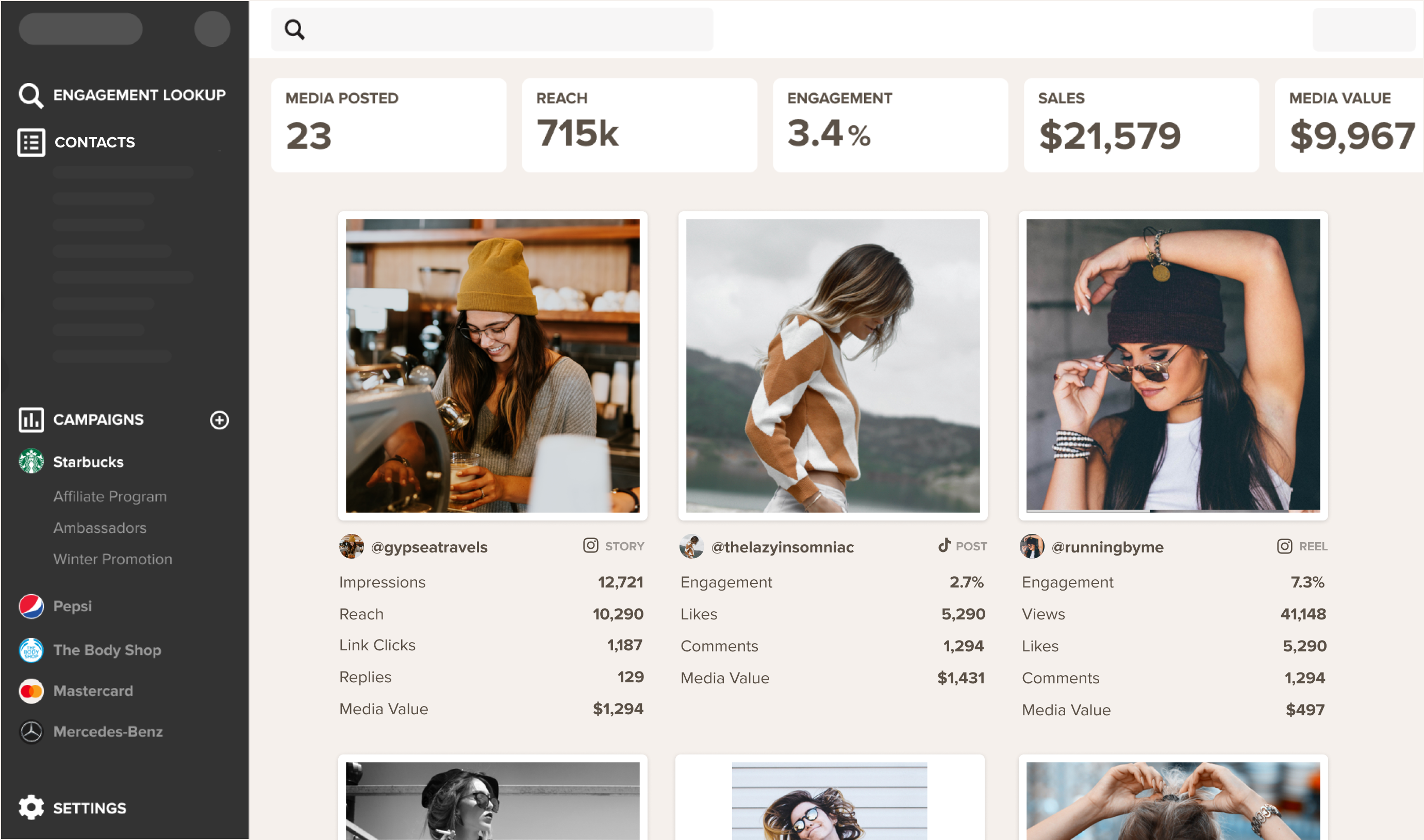
Almost every back-to-school campaign that struggles fails in one of a handful of predictable ways. None of them are creative failures. They're all operational, which is the good news — operational problems have operational fixes.
I've watched this go both ways, and the contrast is never about talent.
The campaign that goes sideways usually looks fine in July. Then a creator goes quiet and resurfaces the day before her post is due with the wrong dimensions. A client emails at 6pm Friday asking how things are tracking, and the honest answer takes two hours to assemble because it lives in four places. By the second week of August the team is spending more time reconstructing status than making decisions, and the wrap report is an archaeology project.















The campaign that works is quieter. The creators went into one workflow. Every deliverable and date sits in one view, so the Friday-night question takes ninety seconds, not two hours. When one platform popped in week two, someone noticed while it was happening and shifted spend before the moment passed. When the season ended, the report was already most of the way written — and the system was still sitting there, documented, ready to point at the holidays.
Same season, same budget, often the same creators. The only real difference was whether the operational layer kept up with the complexity. That's the part you can fix before this August — and unlike most fixes in marketing, this one compounds every season you reuse it.
Back-to-school is coming whether your system is ready or not. The teams that treat it as a repeatable motion — one operational backbone, one source of truth, proof in business terms — are the ones who'll spend the season steering instead of scrambling. If managing multi-creator, multi-platform campaigns at peak is the part that keeps you up at night, it's worth solving before June turns into August.
Book a 20-minute walkthrough
MightyScout gives brands and agencies one place to run influencer campaigns — creator management, multi-platform tracking, and reporting that ties activity to business outcomes.
Alicia Cofi
@aliciacofi


Profiles Posted
15/31
Media Posted
47
15 posts · 32 stories
Potential Reach
486k
Impressions
540k
$5.63 CPM
Sales
$8,824
190% ROI
Link Clicks
422
$7.21 CPC
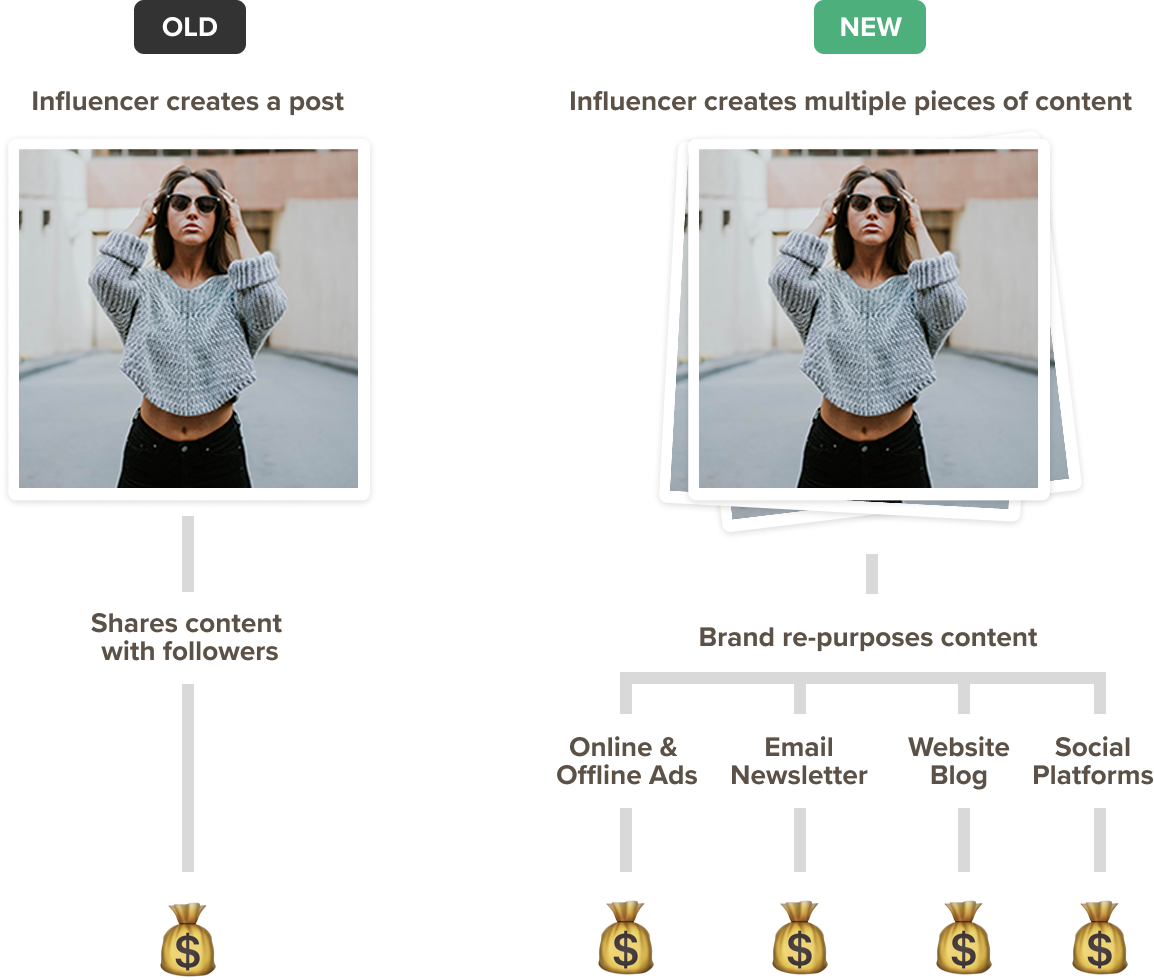
The exact steps brand and agency teams use to go from zero to live creator program in 30 days.
MightyScout will send you this resource plus occasional content on influencer marketing and UGC. Unsubscribe anytime. Privacy Policy